The 10 Hottest Cloud Computing Startups Of 2026 (So Far)
Fireworks AI, PointFive and Starcloud are among the hottest cloud computing startups to impress CRN so far in 2026.

An artificial intelligence cloud and model life-cycle management platform. Financial operations tools that aim to follow AI waste from cloud to coding agent. And a company taking data centers to space.
Fireworks AI, PointFive and Starcloud are among the hottest cloud computing startups to impress CRN so far in 2026 as solution providers and their clients continue to assess which workloads belong in the cloud and the best way to bring operations into the AI era.
These startups are leveraging the cloud to create more access to GPUs, help organizations gain greater control and visibility with their IT estates, and redefine software categories from human resources systems to cybersecurity.
[RELATED: As Neocloud GPU Demand Surges, Partners Are Winning AI Deals And Making Profit]
Cloud Startups 2026: AI, GPUs And Neocloud Demand Surge
Niall Woodward, co-founder and CTO of the Select division of Santa Clara, Calif.-based DoiT International—a member of CRN’s 2026 MSP 500—told CRN in an interview that rightsizing customer cloud spending remains a major source of business for the company.
DoiT and Select have expanded their capabilities beyond helping customers optimize Snowflake spending to now cover Databricks and Google BigQuery, with more innovation planned.
“We’re exploring other things around more operational use cases, so running those products, running those platforms effectively, not just from a cost angle, but from a performance angle as well, investigating production issues,” he said. “Our primary focus is always going to be helping customers get the maximum ROI they can from those investments.”
The neocloud market is scaling at an unprecedented pace, reaching $9 billion in the fourth quarter of 2025, representing an increase of 223 percent year over year, according to data from Synergy Research Group. Synergy is forecasting that the neocloud market will reach $400 billion by 2031, representing a sustained 58 percent annual growth rate over the next five years.
Gartner forecast worldwide sovereign cloud Infrastructure-as-a-Service spending at $80 billion in 2026, a 35.6 percent increase from 2025, back in a February report. IDC said to expect global spending on public cloud services to surpass $1 trillion in 2026, growing more than 21 percent, in a March report.
Spending in the U.S. should reach $647 billion in 2026 thanks to large-scale enterprise migrations, hyperscaler AI infrastructure investment and strong demand from regulated industries. IDC expects that number to double by 2029.
Read on for some of the most compelling cloud computing startups in the industry right now.

Aragorn AI
Co-Founder, CEO: Ed Adjei
Headquarters: Plano, Texas
Aragorn AI positions its technology as an operating system for people operations so that they can better connect systems and manage their data.
The vendor offers a host of integrations—including software like Monday, Vanta, CultureAmp and Navan—through the Aragorn cloud marketplace, according to Aragorn’s website. Users can build integrations without code and launch them in less than seven days. The company works with benefits and total rewards systems, hiring and other parts of the HR stack.
In October, Aragorn raised a $4.3 million seed round of funding by LiveOak Ventures. Dallas Venture Capital participated. The round brought its total funding to $5.5 million.
Adjei co-founded Aragorn in 2022, according to his LinkedIn account. Adjei previously worked at doctor connection platform provider H1 as director of platform product engineering. In 2019, he joined Blackbaud through the acquisition of YourCause, leaving Blackbaud in 2021 as director of software development.

Armada
Co-Founder, CEO: Dan Wright
Headquarters: San Francisco
Armada’s mission to bring edge computing and modular AI infrastructure to more industries continues to capture investors’ attention, with the startup landing an oversubscribed $230 million Series B round of funding in May.
That comes after the startup revealed a closed $131 million strategic funding round that included participation by Microsoft’s venture fund, M12, in July 2025.
The round—co-led by Overmatch, BlackRock and 8090 Industries—gave Armada a pre-money valuation of $2 billion. The startup’s funding announcement also said it grew customer bookings sixfold from Fiscal Year 2025 to Fiscal Year 2026. The first quarter of its Fiscal Year 2027 saw a 21X increase in bookings growth year on year, according to Armada.
Armada offers a partner program for VARs, MSPs and other partner business types, according to the company’s website. In April, the startup revealed that it opened its first Galleon Experience Center at the headquarters of Carahsoft—No. 6 on the 2026 Solution Provider 500. The center aims to show government agencies, education organizations and health-care groups the power of self-sufficient AI compute environments for locations clouds can’t reach.
This year, Armada also expanded its partnership with Nvidia to support Nvidia AI Grid with Armada Edge Platform for telecommunications companies and deepened its Microsoft collaboration to bring customers Microsoft Azure Local with Armada’s Galleon modular data centers and AEP as part of Microsoft’s Sovereign Private Cloud.
Wright co-founded Armada in 2022, according to his LinkedIn account. He previously served as CEO of DataRobot for about a year before launching his startup. He also served as president and COO of the company a year prior.
He also worked at AppDynamics for about seven years, leaving in 2019 with the title of COO. Cisco bought AppDynamics in 2017.
Cognition AI
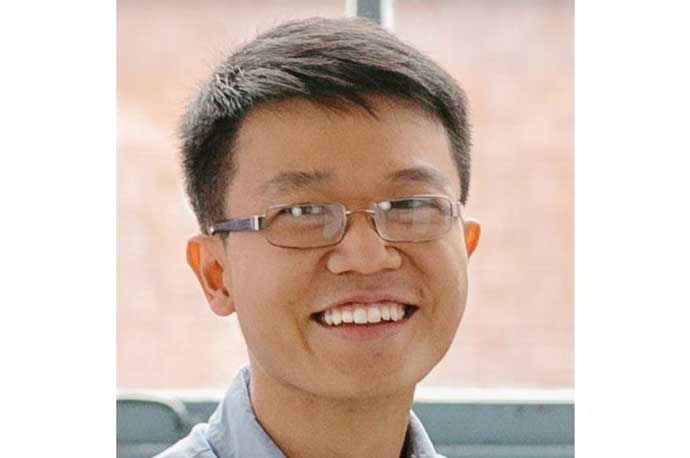
Co-Founder, CEO: Scott Wu
Headquarters: San Francisco
Cognition has been investing in AI innovation and growing partnerships in 2026, counting CRN Solution Provider 500 members Carahsoft, Infosys and Cognizant among the companies helping to scale its Devin cloud agent platform and Windsurf AI-powered software engineering platform Cognition bought last year.
In May, Cognition disclosed that it raised an eye-popping $1 billion round of funding at a $26 billion valuation and that its enterprise usage has grown more than tenfold since the start of 2026. Cognition’s run-rate revenue also reached $492 million. Lux Capital, General Catalyst and 8VC led the round.
Developments by the Cognition team this year include launching Windsurf 2.0 with the Agent Command Center and Devin inside Windsurf, building Devin Desktop out of Windsurf’s integrated development environment, and giving users the Devin CLI local coding agent to help with on-device tasks before delegating to cloud agents.
Wu co-founded Cognition in 2023, according to his LinkedIn account. He previously co-founded AI-powered social media platform Lunchclub and served as its CTO until 2022.

Fireworks AI
Co-Founder, CEO: Lin Qiao
Headquarters: San Mateo, Calif.
After closing 2025 with a hefty $250 million Series C round of funding, Fireworks AI has invested those funds and its human capital into taking its AI cloud and model life-cycle management platform to the next level.
In March, Fireworks bought Hathora, which offers a global container orchestration platform for latency-sensitive, real-time workloads in areas like multiplayer gaming. On the innovation front, the startup has moved its Fireworks Training end-to-end platform for deploying frontier models at scale into preview and moved Fireworks AI on Microsoft Foundry into public preview.
Fireworks also continues to add models to its platform, taking DeepSeek V4 Pro, MiniMax M3, Nvidia’s Nemotron 3 Ultra and Alibaba’s Qwen 3.7 Plus live this year, as examples.
Qiao co-founded Fireworks in 2022, according to her LinkedIn account. She previously worked at Facebook parent Meta for about seven years, leaving with the title of senior director of engineering.
In that role, she “led 300+ world-class engineers in AI frameworks & platform,” building and deploying tools including Caffe2 PyTorch across Facebook data centers, billions of mobile devices, and millions of augmented and virtual reality devices.
Fireworks has a partner program for consultancies, systems integrators, services partners and other business models, according to the startup’s website. Members include BCG and Deloitte.

Hydra Host
Co-Founder, CEO: Aaron Ginn
Headquarters: Miami
Hydra Host looks to provide the underlying layer for next-generation cloud providers through bare metal, not virtualized compute.
The startup positions its technology as an asset-light neocloud service that enables compute supply to connect with workload demand to scale the global token economy while beating centralized clouds on price and flexibility as a network of AI factories.
This month, the vendor revealed that it closed a $100 million Series A round of funding led by Kindred Ventures. The money will go toward expanding its GPU-as-a-Service capacity and advancing its Brokkr AI Factory Operating System for data center partners managing and monetizing GPU capacity and its Confidential Metal for AI builders’ mission-critical inference and training workloads.
Hydra offers a partner program for consultancies, VARs, MSPs and other partner business types, according to the company.
Ginn co-founded Hydra in 2021, according to his LinkedIn account. His resume includes working at Everlane for about two years, leaving the clothing company in 2016 as a growth product manager. He also worked at StumbleUpon for about two years as head of growth, during which he “managed up to 70% of traffic to StumbleUpon and all web-related products.”
Modal Labs
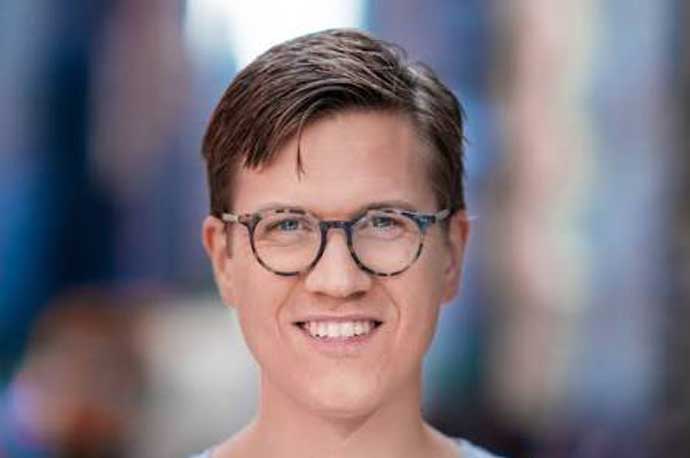
Co-Founder, CEO: Erik Bernhardsson
Headquarters: New York
Modal Labs bills itself as providing the production cloud for AI, allowing users to build in Python before shipping to the cloud.
The startup can route workloads across clouds and regions in real time to give users the GPUs they need in seconds without commitments or capacity planning, according to Modal. The company’s infrastructure spans Amazon Web Services, Google Cloud Platform, Microsoft Azure, Oracle Cloud Infrastructure and others.
In May, Modal disclosed that it raised a $355 million Series C round of funding at a $4.65 billion valuation. General Catalyst and Redpoint led the round. Modal has passed $300 million in annualized revenue.
The startup also bought Butter, which provides secure sandboxes for AI agents.
Product advancements so far this year include lower latency with regional routing, role-based access control (RBAC) now available to all Team and Enterprise plans and integrating Claude Managed Agents with Modal Sandboxes.
Bernhardsson co-founded Modal in 2021, according to his LinkedIn account. His resume includes about six years with Better.com as CTO, growing the team from one to 300. He also worked at Spotify for about seven years, leaving in 2015 as an engineering manager.
At Spotify, he “built a music recommender system from scratch using large scale machine learning algorithms and then built up a team of about 20 people to help me launch a number of features leveraging it, including data engineering, machine learning, backend, and frontend (iOS/JS),” according to his LinkedIn account.
Modal has a partner program for consultancies, implementers and other types of companies, according to the startup’s website.
Nexthop AI
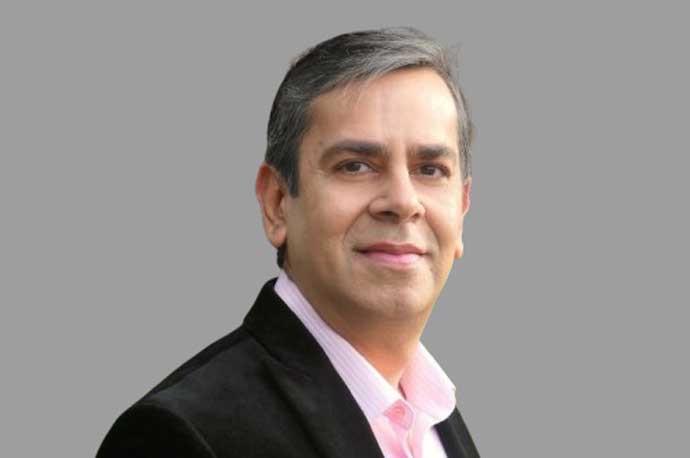
Founder, CEO: Anshul Sadana
Headquarters: Santa Clara, Calif.
Nexthop AI wants to build the most efficient AI infrastructure for the world’s largest cloud operators.
The startup looks to revolutionize cloud networking through off-the-shelf and highly customized switching solutions built on open-source operating systems such as Software for Open Networking in the Cloud and the Facebook Open Switching System.
Nexthop closed an oversubscribed $500 million Series B round of funding in March, taking its valuation to $4.2 billion. Lightspeed Venture Partners spearheaded the round.
The startup has also rolled out new products aimed at cloud and AI data centers including its Disaggregated Spine architecture and the NH-4010, which Nexthop bills as the industry’s lowest-power 51.2-terabit-per-second switch based on Broadcom Tomahawk 5 silicon.
Sadana founded the startup in 2024. He previously worked at Arista Networks for about 17 years, leaving as COO, according to his LinkedIn account.
PointFive
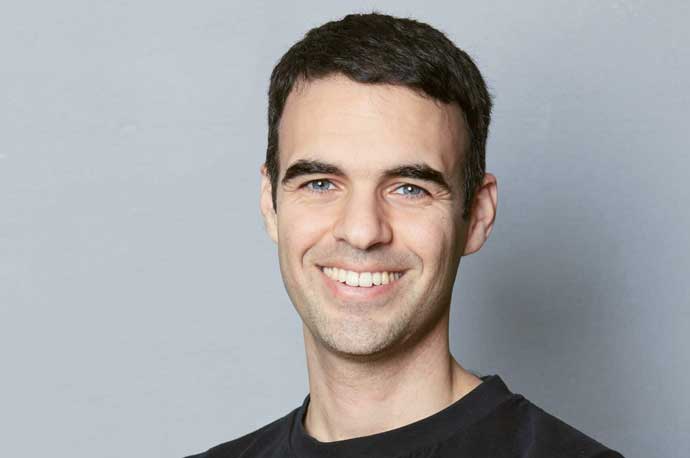
Co-Founder, CEO: Alon Arvatz
Headquarters: New York
This month, PointFive landed a $60 million Series B round of funding to raise the bar for its financial operations platform that aims to follow AI waste from cloud to coding agent.
Accel led the funding round, which follows sixfold annual recurring revenue growth for the startup between 2024 and 2025, according to PointFive. The startup’s platform runs without agents and is read-only, identifying root-cause waste across cloud infrastructure, data platforms and AI workloads. PointFive then routes automated recommendations to engineers who own the fix.
PointFive debuted its new AI Efficiency OS platform experience and TokenShift optimization and compliance tool for AI coding agents. TokenShift promises to help with better control over Claude Code, OpenAI Codex, Cursor, Microsoft Copilot, Windsurf and other modern coding agents.
The company also offers more than 500 unique detection types across seven clouds and can usually find 20 percent to 40 percent more savings than traditional tools.
Arvatz co-founded PointFive in 2023.
PointFive has a partner program that counts CRN Solution Provider 500 members Accenture, Presidio and Capgemini among its members, according to the startup’s website.

Rad Security
Co-Founder, CEO: Brooke Motta
Headquarters: San Francisco
Rad Security inked a major channel partnership this year with Carahsoft, opening up more public sector access to Rad’s AI-driven security platform.
The startup has also worked to expand its FusionAI platform, including a newly introduced RADQL data normalization and retrieval engine that continuously ingests and normalizes telemetry across cloud platforms, identity providers, vulnerability scanners, runtime systems and log sources, according to the startup.
Rad offers a partner program for VARs, managed security services providers, systems integrators and other partner business models, according to the company.
Motta co-founded Rad Security as KSOC (Kubernetes Security Operations Center) in 2021. Motta previously worked at Sonatype for more than a year, according to her LinkedIn account. She left the company last year with the title of vice president of sales.
She previously served as the CRO of web application firewall services provider Wallarm and crowdsourced cybersecurity services provider Bugcrowd.
Starcloud
Co-Founder, CEO: Philip Johnston
Headquarters: Redmond, Wash.
Elon Musk and Jeff Bezos aren’t the only entrepreneurs predicting data centers among the stars.
Startup Starcloud has the distinction of sending the first Nvidia H100 chip to space in November. In February, the startup partnered with Amazon Web Services to launch its on-premises hardware system, AWS Outposts, into space.
The startup’s vision enticed Benchmark and EQT Ventures to lead a $170 million Series A round of funding at a $1.1 billion valuation for Starcloud back in March. The company’s argument is that data centers in space can leverage continuous solar energy and radiative cooling to scale to gigawatts while avoiding earthly permitting constraints.
Johnston co-founded Starcloud in 2024, according to his LinkedIn account. He previously co-founded Opontia in 2020 and led the digital brands aggregator for about three years until its sale to Perfection.
Starcloud’s major partnerships so far include vendor heavyweights Nvidia and Crusoe, with which Starcloud wants to launch the first public cloud in space by 2027.